


| Mohamed Mladjao MOUHAMMAD ANBDOUL ANLYM Doctorant en droit public et sciences politiques FSJES, Mohammedia, Université Hassan II, Casablanca |
| Elasser ABDERRAZEK Professeur de sciences politiques FSJES Mohammedia, Université Hassan II. Casablanca |
RESUME
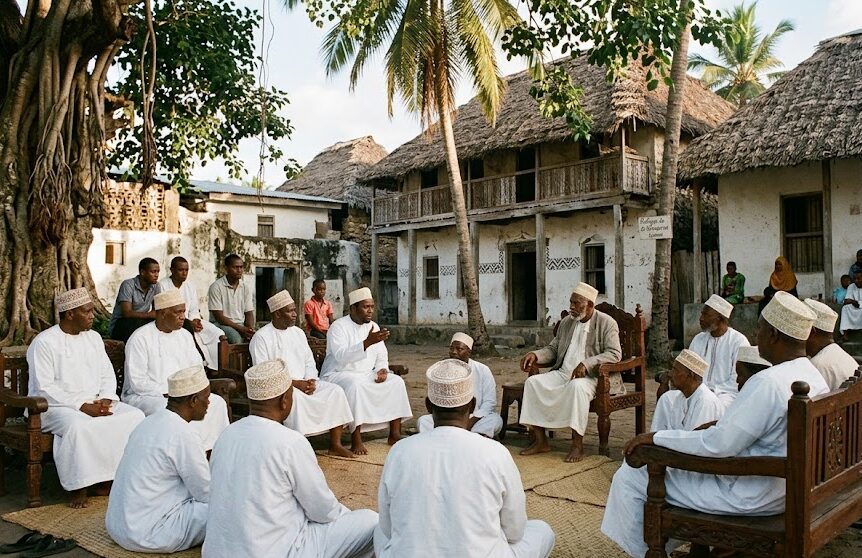
Cette étude propose une lecture historique et analytique de la persistance des structures traditionnelles de gouvernance à Ngazidja dans le cadre républicain comorien. À partir d’une approche qualitative fondée sur l’observation du Mdji (village ou Cité), l’analyse des pratiques coutumières et la confrontation de sources locales et contemporaines, elle examine le rôle des Wafomamdji (Rois de la Cité), du Anda (Grand mariage) et des classes d’âge dans la régulation sociale et la légitimation du pouvoir. L’article met en lumière la continuité des institutions précoloniales à travers le Anda dans la Cité, leur influence sur les hiérarchies locales et la manière dont elles façonnent les rapports entre autorité traditionnelle et autorité républicaine. Il souligne également la capacité des villages à organiser les infrastructures, à réguler les conflits et à mobiliser des ressources locales et diasporiques. Enfin, l’étude révèle comment tradition, mémoire et modernité coexistent, offrant un modèle de gouvernance adaptatif et autonome dans le contexte insulaire africain.
Mots-clés : Comores, Ngazidja, gouvernance traditionnelle, Wafomamdji, Grand Mariage, hiérarchie sociale, autorité locale, pratiques coutumières, légitimité politique, organisation villageoise.
THE VILLAGE: A SANCTUARY IN THE SULTANATE OF THE COMOROS AND A SPACE FOR PARALLEL GOVERNANCE IN THE NEW COMORAN REPUBLIC ON NGAZIDJA
ABSTRACT
| Mohamed Mladjao MOUHAMMAD ANBDOUL ANLYM PhD student in public law and political science FSJES, Mohammedia, Hassan II University, Casablanca |
| Elasser ABDERRAZEK Political science lecturer FSJES Mohammedia, Hassan II University, Casablanca |
This study offers a historical and analytical reading of the persistence of traditional governance structures in Ngazidja within the Comorian republican framework. Based on a qualitative approach combining village observations, analysis of customary practices, and comparison of local and contemporary sources, it examines the role of the Wafomamdji, the Grand Marriage (Anda), and age-based classes in regulating social order and legitimizing authority. The article highlights the continuity of precolonial institutions, their influence on local hierarchies, and how they shape relations between traditional and republican authority. It also emphasizes the villages’ capacity to organize infrastructure, manage conflicts, and mobilize local and diaspora resources. Finally, the study shows how tradition, memory, and modernity coexist, offering an adaptive and autonomous governance model in the African island context.
Keywords: Comoros, Ngazidja, traditional governance, Wafomamdji, Grand Marriage, social hierarchy, local authority, customary practices, political legitimacy, village organization.
Comments are closed, but trackbacks and pingbacks are open.